State of the UK Climate 2025 Report: Climate extremes are becoming the new ‘normal’ for the UK
nathan.reece@r…
The latest edition of the State of the UK Climate Report, published today in the Royal Meteorological Society’s International Journal of Climatology, puts the latest year and decade into a historical context, telling us about the changes already seen in the UK’s climate.
The key change in the UK’s climate is the ongoing rise in temperatures, with extremes particularly affected.
Mike Kendon, Met Office climate information scientist, said:
“2025 was the UK’s warmest year on record, the sixth time this record has been broken in the 21st Century so far. The last four years are all in the top five warmest years. With warming at around 0.25°C per decade since the 1980s, it seems likely this record will be broken again in a matter of years.”
The latest 10-year period (2016-2025) is 1.33°C warmer than the period from 1961-1990.
Key observations from 2025:
- 2025 was the warmest year in the UK series from 1884, with the last four years in the top five warmest.
- 2025 included the UK’s warmest spring and summer on record, with the six months (March to August) all in the top ten warmest of their respective monthly series.
- The most recent decade 2016 -2025, has been 0.51°C warmer than the period 1991-2020, and 1.33°C warmer than 1961-1990
- The average hottest day of the year has warmed by over 4.5°C in a swathe from Kent to Lincolnshire for the most recent decade, 2016-2025, compared to 1961-1990
- The number of days over 30°C and nights over 18°C has more than quadrupled for Greater London for the most recent decade, 2016–2025, compared to 1961–1990.
- There were 297 marine heatwave days for Northwest European seas and the Northeast Atlantic in 2025, referenced to the 1991-2020 period, more than any other year since 1982 and exceeding the previous record of 178 days in 2023
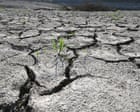
- In spring 2025, most of England and Wales received less than half of the 1991-2020 average rainfall, and in some places less than one third. England had its driest spring for over 100 years.
- The winter half-year (October to March) for the most recent decade, 2016–2025, has been 3% wetter than 1991–2020, and 13% wetter than 1961–1990, with little change for the summer half-year
- Spring and summer 2025 combined saw less than 40% of 1991–2020 average rainfall in the driest areas, but for durations longer than six months the 1976 drought was far more severe
- 2025 was the sunniest year in the UK series from 1910, with 1645 sunshine hours, 117% of the 1991-2020 average.
- Spring 2025 was the sunniest spring in the UK series from 1910 and also sunnier than all but three summers: 1976; 1995 and 1911.
Professor Liz Bentley, Chief Executive of the Royal Meteorological Society, said:
“After the first quarter of the 21st Century, this report is an opportunity to takes stock of climate change in the UK as ‘ground truth’ from weather observations. The way we experience climate change most is through the weather extremes. Climate change has been described by scientists for many years but is now increasingly being felt by the UK population in their own homes and communities.”